Staying Warm on the Job: A Guide
Posted by: Fatigues Army Navy Outdoor Gea on 2nd Feb 2026
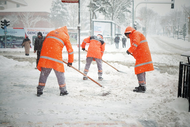
Loggers, construction workers, road crews, landscapers, forestry workers, first responders, law enforcement personnel - what do these people all have in common?
They’re often outdoors when they’re in the field, and that means long hours exposed to the elements, in addition to the other grueling aspects of whatever line of work is in play.
Given this year’s record cold temperatures, some of the coldest we’ve seen in years, you might be wondering how you can stay warmer when you’re out there, especially if your line of work is one of the professions listed above.
Fortunately, staying warm on the job site is not rocket science, and we know a thing or two about it. That vintage Vietnam jacket you have just might not offer enough insulation, so here’s your guide on staying warm when working outdoors in extreme cold.
Natural vs. Synthetic Materials
The truth is that there are both high performance synthetics and natural materials that can keep you warm in the cold, but as a general rule, the best insulators are those natural ones that are well-adapted to the cold.
Avoid cotton. If it gets wet, it will suck the heat right out of you, literally freezing you in the process. This is why some outdoorsmen say cotton kills.
But, both wool and down are excellent natural insulators, as good or better than any synthetic. Down is lightweight and very warm, the problem is that it loses its insulative efficiency when it gets wet.
Wool is heavier and bulkier, but no less insulative than down, and it’s a lot more durable. Moreover, felted wool can be entirely waterproof, and even if wool gets wet, it maintains most of its thermal insulative properties.
It’s in the Layers
Keeping warm in the cold on a jobsite mostly comes down to how wisely you layer, not how thick of a single layer you can wear.
Start with your baselayer, which should be a thin, wicking layer of a warm material such as wool or a performance synthetic. This baselayer will help keep you dry and wick moisture away from your skin.
Next should come your midlayer, which is where most of your insulation will come from. This should be your warmest layer.
Lastly, you will want a shell that will afford not only additional insulation, but protection against the other elements. The best outer layers should be both windproof and waterproof.
Covering Your Extremities
If it’s truly cold outside, 20 or 30 degrees or more below freezing, you should keep your extremities covered at all times. This includes not just your hands, but your head, ears and neck as well.
A good, insulated hat, made of wool or lined with fur, is best. You’ll also want a wool scarf to keep the cold off your neck and away from your core, and earmuffs too.
By the way, mittens are better than gloves because they keep your fingers next to each other. Unless you need the dexterity of each individual finger, get a good pair of wool mittens instead of gloves.
Don’t Skimp on the Shell
Your outermost covering, which is known as your shell, is not an area to compromise, even if you have a really good baselayer and midlayer.
You’ll want a tough shell made of some performance synthetic, or of felted wool or a dense woven textile like cotton duck, and treated with a waterproof coating to keep you dry in inclement conditions. Also, a windproof shell is a good idea, too, because windchill makes things even worse when temperatures are already low.
Keep Moving
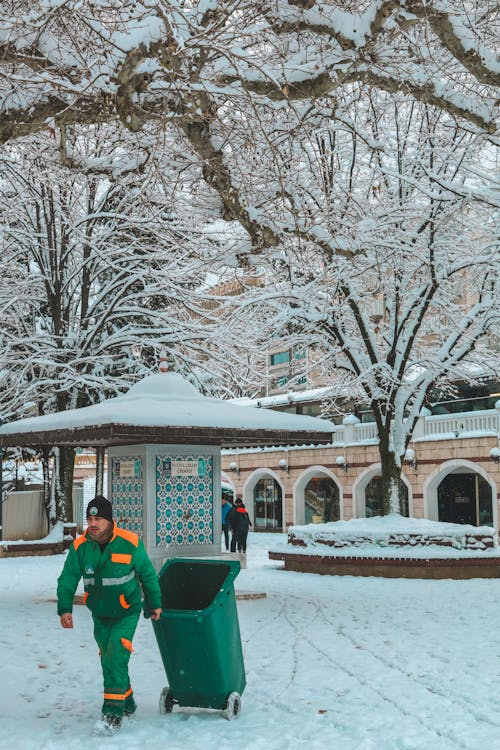
Staying warm on the jobsite, especially in extreme cold, is not just about what you wear, but about what you’re doing. Standing around is a great way to freeze.
Keep busy with whatever it is you’re working on, and move around as much as possible. Even light activity can keep you warm in very cold temperatures, even when you aren’t well insulated. If you are, staying warm will be much easier.
Stay Hydrated
A lot of people don’t realize how easy it is to get dehydrated in the cold, but this will exacerbate hypothermia if you let it. With every breath you lose water, and in some conditions, worse in the cold than in the heat, especially if the air is dry. Make sure you have enough water with you and take sips as needed throughout the day.
Bring Along Handwarmers
One note on something we previously recommended, that mittens are better than gloves. One other thing about mittens is that it’s easier to fit handwarmers in them. Take along some handwarmers and use them if needed, as they will help keep your hands more comfortable as you work.
Take Advantage of the Sun
Lastly, if it’s a sunny day, take advantage of the sun while you have it. Even at our latitude, in cold weather, the sun is surprisingly warm even in the winter months. You can get a lot of warmth from the sun especially if there is no windchill, even if the day is really cold.
Explore Cold-Weather Gear and More Here
Save the vintage Vietnam jacket for spring. Explore our collection of cold weather work gear, including Polar Fleece outdoor clothing and extreme cold weather insulated coveralls, which are great because there’s no gap between your jacket and pants, which you’ll wear underneath, so no cold air can get in.
Explore our collection, and make sure you check out our surplus gear as well. There’s plenty of affordable, cold-weather military gear we carry here, even if a vintage Vietnam jacket is better suited for other times of the year.